
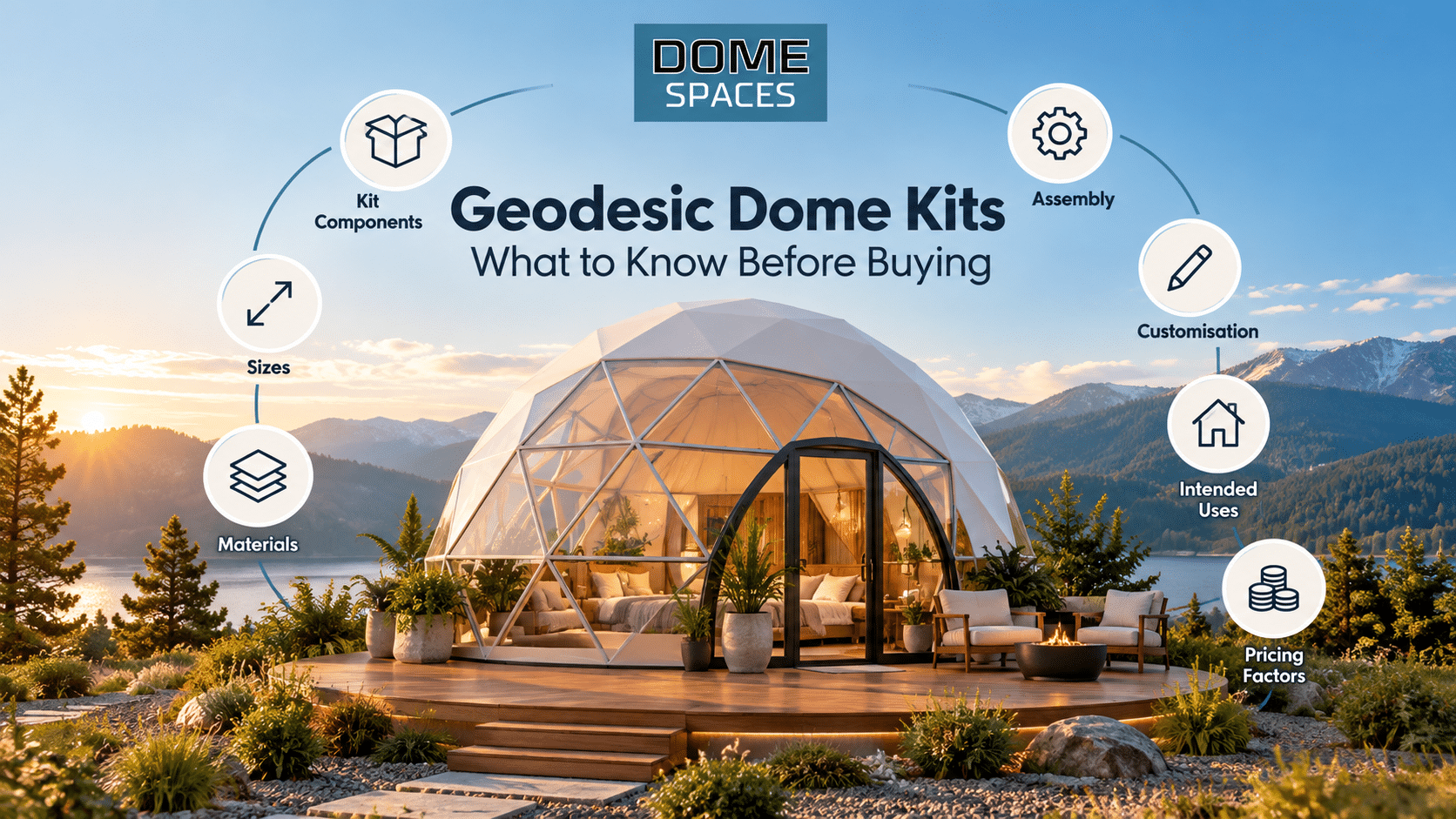
Geodesic dome kits offer a practical way to create unique structures for homes, greenhouses, glamping resorts, and outdoor spaces. However, choosing the right kit involves more than comparing prices or selecting an attractive design. Frame materials, covering options, dimensions, assembly requirements, and long-term maintenance all influence how well a dome performs.
In this guide, we’ll explain what a geodesic dome kit includes, how to choose the right size and materials, what to expect during assembly, and which customization options are available. We’ll also explore common uses for dome kits, the factors that affect their cost, and what to check before buying so you can choose a structure that fits your project and budget.
What Is Included in a Geodesic Dome Kit?
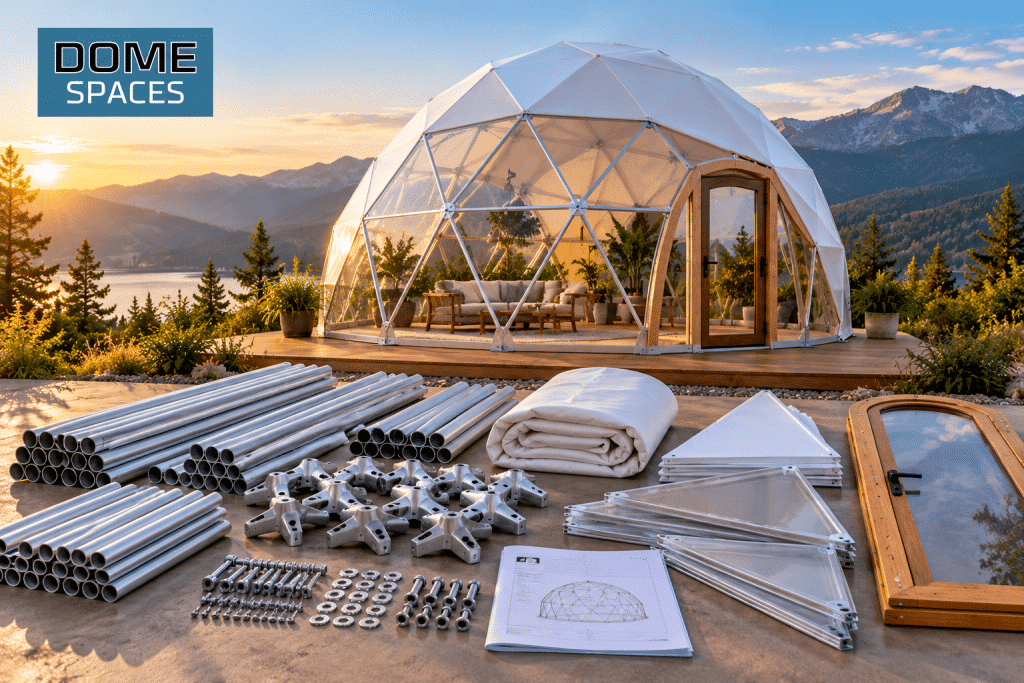
A geodesic dome kit contains some or all of the components needed to assemble a dome structure. The exact package varies by manufacturer, design, and intended application. Some kits supply a basic frame, while others include the exterior covering, doors, windows, and installation hardware.
Common components include:
- Structural frame: The main framework, typically made from connected struts or panels arranged in a geometric pattern.
- Connectors and hubs: Components that join the frame members and hold the structure together. Their design affects assembly and structural performance.
- Covering or panels: Depending on the model, these may include fabric, PVC, polycarbonate, fiberglass, or glass.
- Doors and windows: Openings for access, ventilation, and natural light, depending on the kit configuration.
- Installation hardware: Bolts, brackets, fasteners, and other fittings required for assembly.
- Assembly instructions: Diagrams, component labels, and installation guidance.
Before purchasing, request a detailed list of included and optional components. A low-priced kit may not include a foundation, insulation, electrical provisions, interior finishes, or professional installation.
Also confirm whether the package includes everything needed to secure the dome to its base. Missing or incompatible components can add unexpected costs and delay installation.
How to Choose the Right Geodesic Dome Kit Size
The right size depends on how you intend to use the dome and how much usable interior space you need. A structure that works well as a garden retreat may be unsuitable for a guest suite or permanent residence.
Consider diameter, height, and floor area
Diameter provides a useful starting point, but it does not tell the whole story. The dome’s height, shape, entrance position, and interior layout determine how comfortably people can move around and use the space.
When comparing sizes, consider:
- The number of people who will use the dome.
- Space needed for beds, furniture, equipment, or growing benches.
- Clearance around doors and walkways.
- Storage and utility requirements.
- The available building area and access for installation.
Small geodesic dome kits may work well for garden spaces, compact retreats, or specialized applications. Larger structures provide more room for accommodation, commercial activities, and multiple functional areas.
For a residential project, sketch the intended floor plan before selecting a size. For a glamping property, consider the space needed for sleeping, seating, luggage, and any private bathroom or connected annex.
Remember that advertised floor area does not automatically equal fully usable space. Check the manufacturer’s dimensions and interior layout carefully.
Which Materials Are Best for Geodesic Dome Kits?
Materials affect durability, weight, appearance, insulation, maintenance, and price. The best option depends on the local climate and the level of comfort the structure needs to provide.
Frame materials
Steel: Steel frames can provide the strength needed for certain larger or more demanding applications. However, the coating, corrosion protection, connection details, and structural design are important, particularly in humid or coastal environments.
Aluminum: Aluminum is relatively lightweight and naturally corrosion-resistant. It can be a practical choice where ease of handling and resistance to corrosion are priorities, although its suitability depends on the design and engineering specifications.
Wood: Wooden geodesic dome kits appeal to buyers who prefer a natural appearance. Wood selection, moisture protection, connection details, and regular maintenance all affect its long-term performance.
Do not compare frame materials on strength or price alone. Ask about the complete structural system, including connectors, anchoring, and design loads.
Covering and panel options
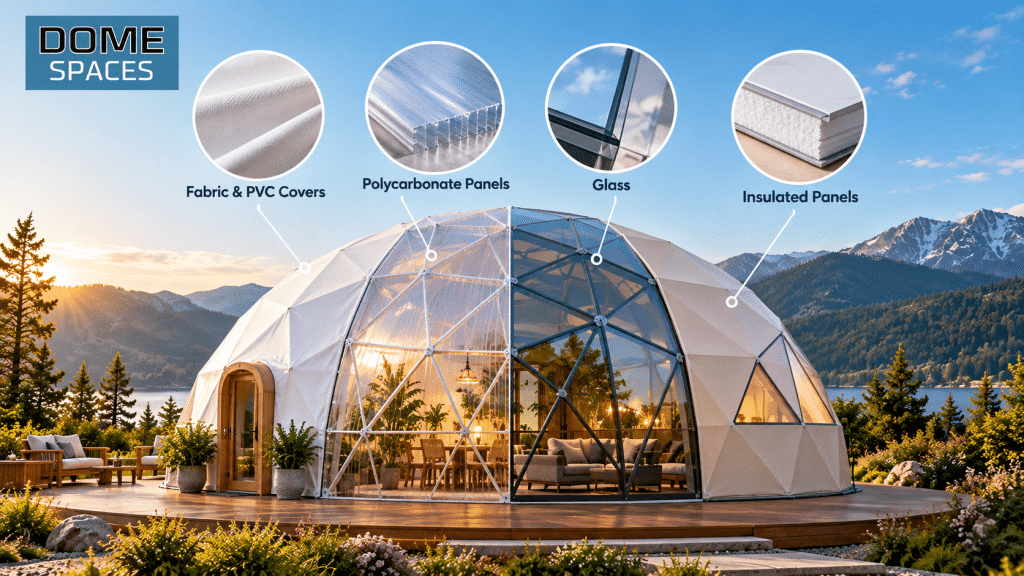
The exterior material determines how much light enters the dome, how well it retains heat, and how much maintenance it requires.
- Fabric and PVC covers: Common in portable, recreational, and certain glamping structures. Check UV resistance, waterproofing, fire-performance specifications, and replacement requirements.
- Polycarbonate panels: Allow natural light into the structure and are used in greenhouse and hospitality applications. Check UV protection, panel thickness, insulation, and ventilation options.
- Glass: Provides clear views and a premium appearance. Its weight, safety glazing requirements, framing, and installation costs need careful consideration.
- Insulated panels: Can help regulate indoor temperatures, depending on the panel construction and overall building envelope.
For a dome intended for year-round use, assess insulation, air sealing, moisture control, and ventilation as a complete system. The U.S. Department of Energy explains these considerations in its guide to insulation and air-sealing essentials.
How Difficult Is It to Assemble a Geodesic Dome Kit?
Assembly requirements vary significantly between a lightweight recreational dome and a larger, enclosed building. Some smaller kits are designed for DIY installation, while permanent residential and commercial structures may require professional installation and engineering oversight.
The typical process involves preparing the site, establishing a suitable foundation or base, organizing the components, assembling the frame, securing the covering or panels, and fitting the doors, windows, and accessories.
The number of components, connector design, dome size, and quality of the instructions can all influence the time and effort involved.
Before ordering, ask the supplier:
- Are installation instructions and component diagrams provided?
- What tools and equipment are required?
- How many people are recommended for assembly?
- Is a prepared foundation or platform necessary?
- Is professional installation available?
- What support is provided if components are missing or do not fit?
For a permanent structure, confirm the local building department’s requirements before beginning work. Depending on the location and intended use, permits, engineered plans, inspections, and compliance with applicable building codes may be necessary.
Site preparation also deserves attention. Drainage, access, soil conditions, wind exposure, and potential flooding can influence foundation design and overall project costs.
What Customization Options Should You Consider?
Customization allows a dome to suit the intended use rather than forcing the project around a standard configuration. However, some changes are easier to make before manufacturing than after installation.
Common options include:
- Doors and windows: Choose appropriate access points, window placements, and ventilation openings.
- Covering and glazing: Select materials that balance privacy, natural light, appearance, and weather protection.
- Insulation and climate control: Consider heating, cooling, ventilation, and condensation management for enclosed spaces.
- Interior layout: Plan for furniture, partitions, storage, lighting, and utility connections.
- Exterior additions: Depending on the design, a dome may accommodate a deck, entrance platform, connecting tunnel, or separate annex.
For example, a dome used for guest accommodation may need privacy features, comfortable indoor temperatures, and space for a bathroom. A greenhouse has different priorities, including light transmission, airflow, irrigation, and temperature management.
If your project has unusual dimensions, specialized materials, or specific architectural requirements, consider a supplier that offers custom domes.
Confirm which changes are included in the standard price and which require additional engineering, manufacturing, or installation work.
What Can You Use a Geodesic Dome Kit For?
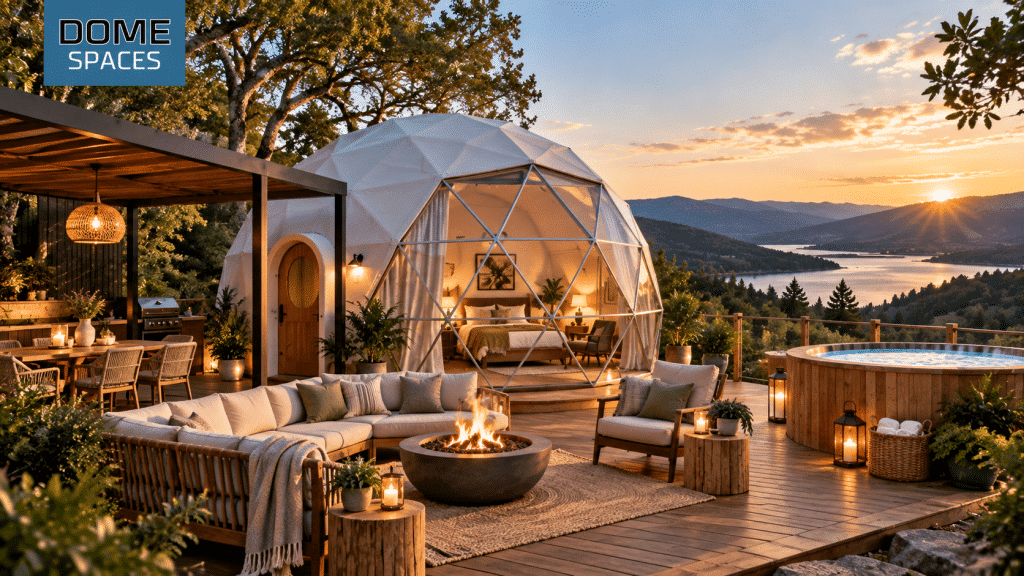
Geodesic dome building kits can serve several purposes, but the requirements differ depending on the application.
Geodesic dome house kits
Residential domes require more than an attractive frame and weather-resistant exterior. Insulation, air sealing, ventilation, utilities, foundations, emergency exits, and compliance with residential building codes all need consideration.
Before purchasing geodesic dome house kits, confirm that the proposed structure is suitable for permanent occupancy and that the supplier can provide the technical documentation needed for your project.
Geodesic dome greenhouse kits
Greenhouses need an appropriate balance of sunlight, temperature control, humidity management, and ventilation. A polycarbonate covering may provide useful light transmission and impact resistance, but performance depends on the specific panel and its installation.
When comparing geodesic dome greenhouse kits, look at vent placement, irrigation access, growing space, drainage, and the ability to manage excessive heat. Penn State Extension’s greenhouse production guidance explains why ventilation, temperature control, and water management are important to greenhouse operations.
For buyers considering geodesic dome greenhouse polycarbonate kits, check whether the panels are designed for greenhouse use and whether the complete structure meets the environmental demands of the growing location.
Geodesic dome kits for glamping and hospitality
For glamping operators, the right dome can become a distinctive part of the guest experience. However, the structure must also support practical requirements such as comfortable sleeping arrangements, privacy, weather protection, ventilation, and easy maintenance.
The choice of covering influences the experience. Transparent panels can create panoramic views, while insulated or opaque configurations may provide greater privacy and temperature control.
Explore DomeSpaces’ glamping dome options to compare structures designed for outdoor accommodation and hospitality applications.
When evaluating a dome for a commercial property, consider how the size, interior amenities, installation costs, and maintenance requirements fit the overall business plan.
Other applications
Depending on their design and specifications, dome structures can also serve as garden studios, event spaces, recreational shelters, workshops, and educational environments. Check the intended-use specifications before assuming that a kit designed for one application will suit another.
How Much Does a Geodesic Dome Kit Cost?
Geodesic dome kit prices vary according to size, materials, included components, and customization. A basic frame kit and a fully enclosed, insulated dome are different products, so their prices should not be compared without accounting for what each includes.
The main pricing factors are:
1. Size and configuration: Larger structures generally require more materials and may involve more complex installation. Unusual shapes or layouts can increase design and manufacturing costs.
2. Frame materials: Steel, aluminum, and wood have different material, fabrication, finishing, and maintenance requirements.
3. Exterior covering: Fabric, PVC, polycarbonate, glass, and insulated panels have different costs and performance characteristics.
4. Included features: Doors, windows, ventilation, insulation, lighting, and climate-control provisions can add to the purchase price.
5. Foundation and site preparation: Groundwork, drainage, platforms, anchoring, and access improvements may be separate expenses.
6. Shipping and installation: Delivery distance, component dimensions, equipment needs, labor, and professional installation can materially affect the final budget.
7. Compliance and ongoing costs: Engineering services, permits, inspections, maintenance, and replacement parts should also be considered.
When comparing geodesic dome kits for sale, ask for an itemized quote that distinguishes the kit price from delivery, foundation work, installation, and optional accessories. This makes it easier to compare suppliers on a like-for-like basis.
For residential or commercial projects, assess the total cost of creating a usable structure rather than focusing only on the advertised kit price.
What to Check Before Buying a Geodesic Dome Kit
Before placing an order, use this checklist to compare the available options:
- Components: Are the frame, connectors, fasteners, covering, and necessary fittings included?
- Dimensions: Are the diameter, height, floor area, and usable interior space clearly specified?
- Materials: Are the frame and exterior suitable for the intended use and local climate?
- Structural performance: Can the supplier provide documentation for relevant wind, snow, and other design loads?
- Installation: Are the instructions, tools, equipment, and professional support requirements clear?
- Customization: Can the dome accommodate the required doors, windows, ventilation, insulation, and utilities?
- Compliance: Have you checked local zoning, permits, foundation requirements, and building codes?
- Warranty: Are material defects, structural components, coverings, and replacement parts covered?
- Total cost: Have you accounted for delivery, installation, site preparation, and ongoing maintenance?
For U.S. projects, FEMA’s Flood Map Service Center can help you review official flood hazard information for a proposed site. This is one useful part of site assessment, alongside local planning requirements and professional advice.
Taking the time to review these details helps reduce unexpected expenses and makes it easier to choose a kit that fits the project’s practical requirements.
Find the Right Geodesic Dome Kit for Your Project
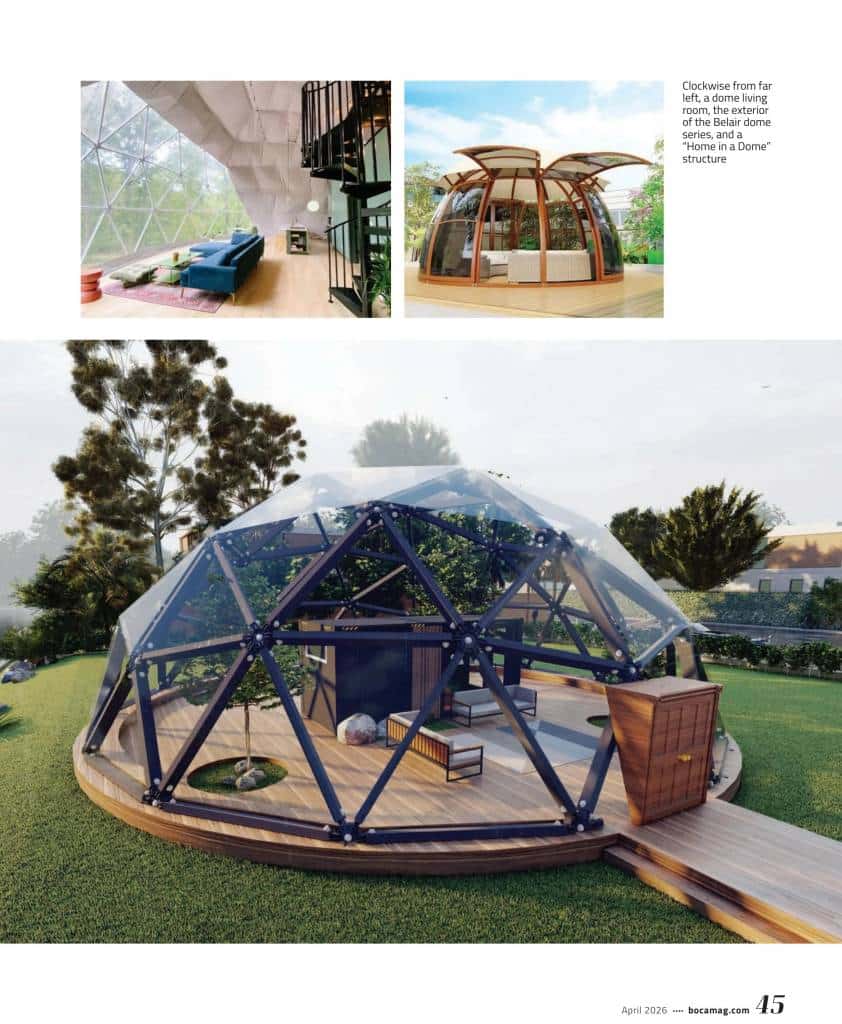
Choosing a geodesic dome kit starts with understanding how the structure will be used. Size, frame materials, exterior panels, assembly requirements, and customization options all influence the final result. A greenhouse, permanent residence, and glamping accommodation each require a different combination of features.
Compare complete specifications and total project costs before making a decision. Consider not only the initial investment but also installation, climate control, maintenance, and the long-term performance of the structure.
Explore the DomeSpaces dome collection to review available dome designs and identify options that align with your project’s size, functionality, and design goals.
Writer : Neha Verma
