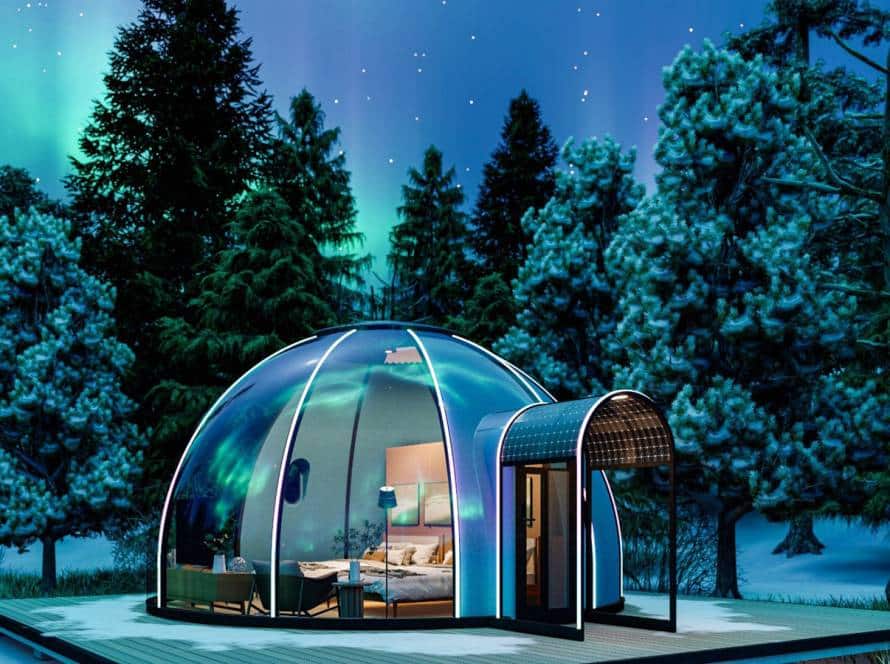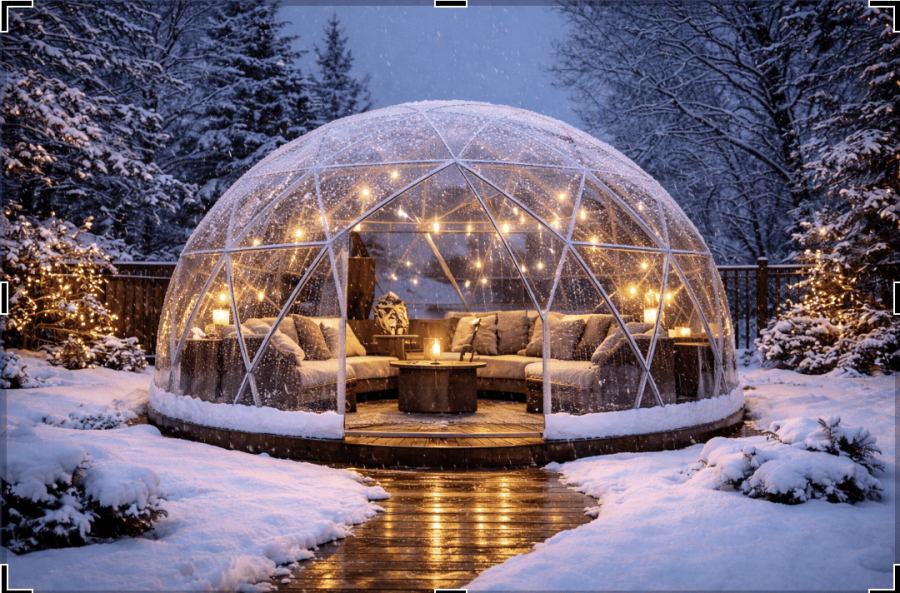
If you’re planning to launch a glamping business, expand a resort, or add unique accommodations to your property, one of the first decisions you’ll face is choosing between a glamping pod and a dome structure.
Both options are booming: The global glamping market was valued at USD 2.35 billion in 2021 and is expected to grow at a CAGR of 10.9% from 2022 to 2030, reaching USD 5.94 billion by 2030, according to Grand View Research. But choosing the wrong structure type can cost you tens of thousands of dollars and months of lost bookings.
This guide compares glamping pods and geodesic dome tents head to head — covering costs, setup, year-round usability, revenue potential, and planning requirements. By the end, you’ll know exactly which structure suits your site, your budget, and your guests. We’ll also look at why many serious glamping operators are choosing geodesic dome structures over traditional pods.
The Quick Answer
For a permanent, revenue-generating glamping site, a geodesic dome structure almost always delivers better long-term value than a traditional glamping pod — more natural light, stronger visual appeal, and lower cost per square foot at scale. If you need something portable or want to test the market with minimal commitment, a glamping pod or portable dome tent may be the smarter starting point.
Read on for the full breakdown.
What Is a Glamping Pod?
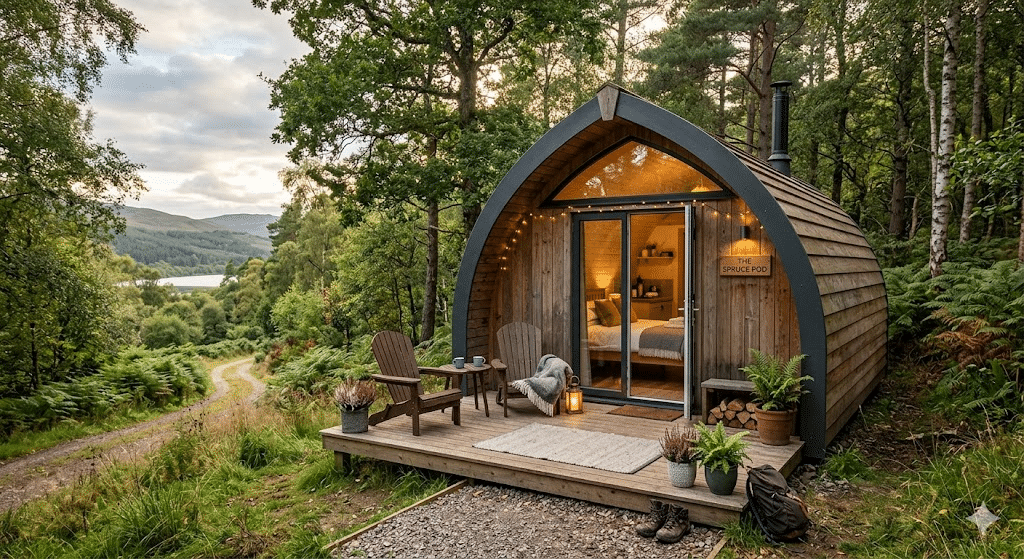
A glamping pod is a self-contained, semi-permanent or permanent accommodation unit — typically a rounded or barrel-shaped structure made from timber, insulated panels, or composite materials. Think of it as the midpoint between a log cabin and a boutique hotel room: built for comfort, designed to stay put.
Most glamping pods include:
- Solid insulated walls (timber, composite, or polycarbonate)
- Electricity, heating, and sometimes plumbing
- A fixed foundation or decking base
- Interior fittings: beds, seating, sometimes a kitchenette or en suite
Glamping pods are built to stay put. You wouldn’t disassemble one at the end of the season — they’re designed for year-round occupancy and rental income.
How much do glamping pods cost?
Entry-level glamping pods (basic timber construction, no en suite) typically start around $8,000–$15,000. Mid-range pods with bathrooms, king beds, and premium interiors run $20,000–$40,000. Fully bespoke luxury pods can exceed $50,000 per unit. Add site preparation, foundations, utilities connection, and planning fees, and the all-in cost for a single pod on a new site often exceeds $60,000. See our pricing guide for a full comparison.
What Is a Dome Tent?
The term “dome tent” covers two very different product categories — and confusing them is one of the most common mistakes buyers make.
1. Portable dome tents
These are lightweight camping tents with a geodesic or semi-geodesic frame and fabric flysheet, designed for backpackers and festival-goers. Prices range from $200 to $2,000. They’re not suitable for commercial glamping.
2. Permanent geodesic dome structures
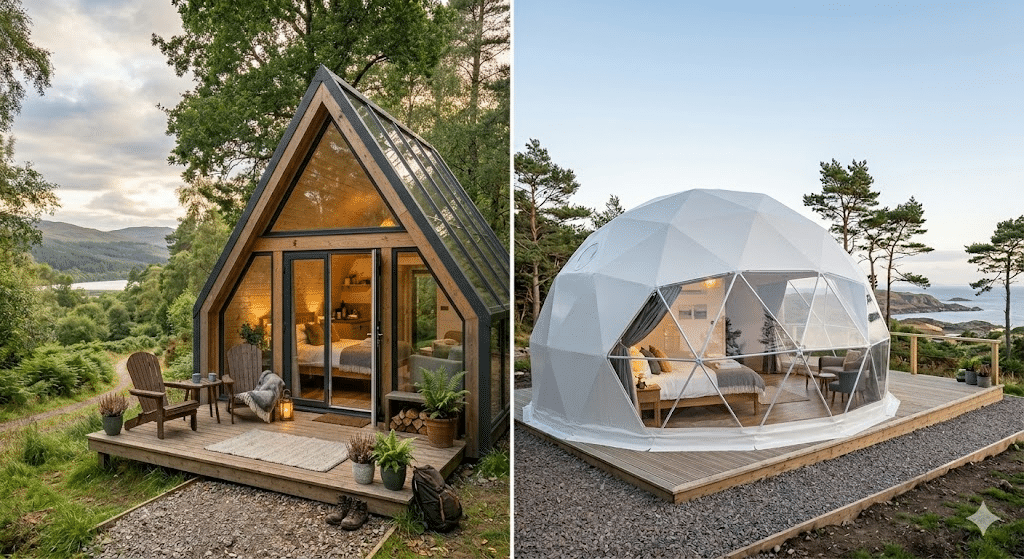
This is where it gets interesting for glamping operators. A geodesic dome structure uses a triangulated steel or aluminium frame covered in polycarbonate panels, PVC, or ETFE film. These are not tents. They are buildings, designed for year-round use with proper insulation, interior fit-outs, and fixed foundations.
The distinction matters because it affects everything from cost and planning requirements to durability and guest experience. When most glamping operators talk about “dome tents,” they are usually referring to permanent geodesic dome structures that combine the immersive feel of outdoor living with the comfort and functionality of a modern building.
| Glamping Pod | Geodesic Dome | Portable Dome Tent | |
| Typical cost | $8,000–$50,000+ | $3,000–$20,000 | $200–$2,000 |
| Setup time | Days–weeks (pro install) | 1–3 days | 1–4 hours |
| Insulation | Excellent (solid walls) | Good (fabric + frame) | Minimal |
| Year-round use | Yes | Yes (with heating) | No (seasonal) |
| Planning permission | Usually required | Sometimes required | Rarely required |
| Best for | Holiday lets, glamping businesses | Year-round retreats, eco stays | Camping, festivals, personal use |
| Revenue potential | High ($150–$400/night) | High ($120–$350/night) | None (personal use) |
5 Key Differences That Actually Matter
1. Value for money at scale
Per square metre, a geodesic dome structure typically costs 20–40% less to build than an equivalent glamping pod. The reason: a sphere encloses the maximum volume for a given surface area, so you get more usable interior space per dollar of material. For operators building 4–6 units, this saving is significant. See our full dome pricing page for a detailed breakdown.
2. Visual appeal and booking rates
Both structures photograph well. But domes photograph exceptionally well. The distinctive shape creates a “wow factor” that drives social media shares, editorial coverage, and word-of-mouth bookings.
According to Glamping Hub’s annual trends report, dome and bubble accommodation consistently ranks among the most-booked and highest-rated categories on the platform. This translates directly to occupancy rates and nightly pricing power.
3. Natural light and stargazing
A geodesic dome fitted with clear or tinted polycarbonate panels — like the Maverick Clear Polycarbonate Dome from DomeSpaces — offers panoramic natural light and stargazing that a glamping pod simply cannot match. This is one of the most sought-after features in luxury glamping, and it comes built-in.
4. Planning and permitting
Both glamping pods and permanent dome structures typically require planning permission or permitted development approval when used for commercial accommodation. Requirements vary significantly by jurisdiction — always consult your local planning authority before committing to either structure type. The American Glamping Association publishes useful guidance for US operators navigating local planning rules.
5. Longevity and maintenance
A timber glamping pod requires regular maintenance — repainting, retreating, and potentially re-roofing over 10–15 years. Steel-framed geodesic domes with polycarbonate cladding are largely maintenance-free once installed. The frame is galvanised or powder-coated; the panels are UV-stabilised and typically rated for 10–20+ years. For a commercial operator, that’s a meaningful reduction in ongoing operating costs.
Which Should You Choose?
Choose a glamping pod if:
- You want a proven, familiar product that guests immediately understand
- Your planning situation favours enclosed, opaque structures
- You prefer a cabin aesthetic over a dome look
- You need a lower upfront cost per unit
Choose a geodesic dome if:
- You want maximum visual impact
- You’re building 3+ units and want better economics at scale
- Stargazing or panoramic views are a feature of your location
- You want a low-maintenance structure with a long service life
- You’re targeting the premium glamping market ($250+/night)
While both structures can be successful, geodesic domes consistently stand out for their ability to attract attention, generate bookings, and create memorable guest experiences. For operators targeting the premium glamping market, that advantage is often difficult to ignore.
What DomeSpaces Offers
DomeSpaces supplies geodesic dome structures for glamping operators, resorts, and private landowners across North America and beyond. Our range includes everything from entry-level camping domes to fully fitted luxury glamping domes with en suites, kitchenettes, and premium interiors.
Every project includes a site consultation, structural drawings, and installation support. If you’re weighing up domes against pods for your site, get in touch with our team and we’ll provide a detailed specification comparison.
The Bottom Line
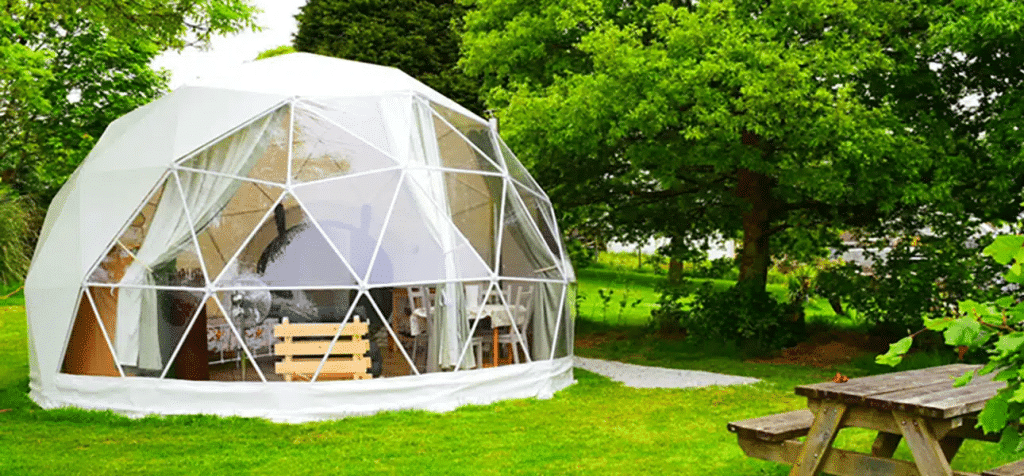
Choosing between a glamping pod and a geodesic dome isn’t just a design decision—it’s a business decision.
While pods provide a practical and proven accommodation model, geodesic domes offer something increasingly valuable in today’s hospitality market: differentiation. Their iconic design, panoramic views, and experiential appeal help transform a simple overnight stay into a memorable destination experience.
For property owners looking to maximize guest engagement, social sharing, premium pricing, and long-term returns, geodesic domes frequently deliver greater value beyond their initial investment.
The real question isn’t “pods or domes?” It’s whether you want to offer guests a place to stay—or a reason to book in the first place.
Writer: Neha Verna