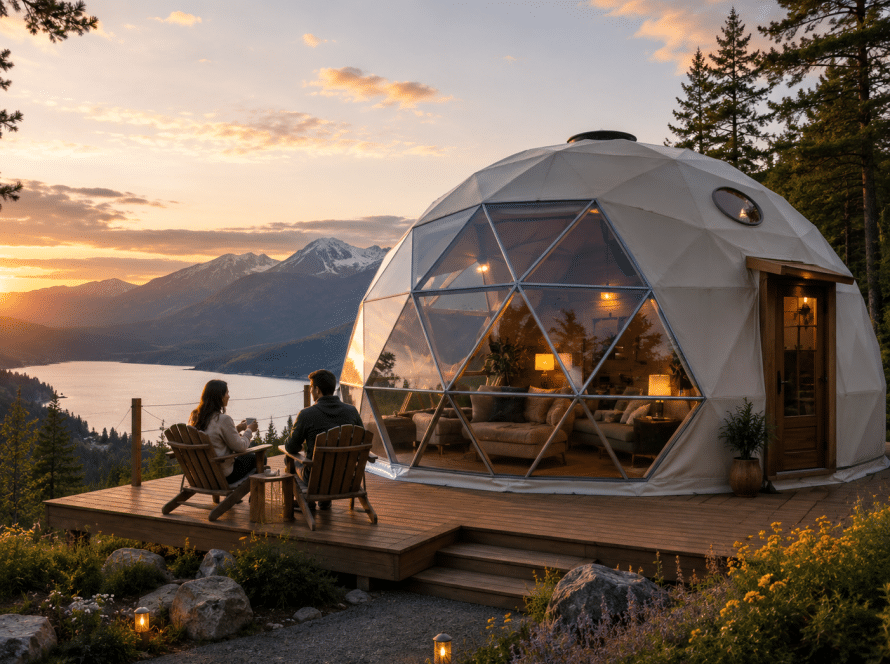
The geodesic dome cost in 2026 has become an important consideration for developers, hospitality brands, and landowners looking to build unique, high-performing spaces.
From luxury glamping resorts to modern dome homes and commercial installations, geodesic domes offer a strong mix of design efficiency, durability, and long-term revenue potential. At the same time, the cost of a dome can vary widely based on factors such as size, materials, structural engineering, and the level of customization.In this guide, we take a detailed look at geodome cost, including pricing ranges, cost per square foot, material choices, hidden expenses, and return on investment. The goal is to help you plan your project with clarity and make a well-informed decision.
What Is a Geodesic Dome?
A geodesic dome is a highly efficient structural system made up of interconnected triangles that evenly distribute stress throughout the frame. This design creates a lightweight yet incredibly strong enclosure that can cover large spaces without the need for internal supports.
Because of its geometry, a dome uses fewer materials while maintaining superior structural integrity, making it both cost-efficient and performance-driven.
Why Domes Are Gaining Popularity
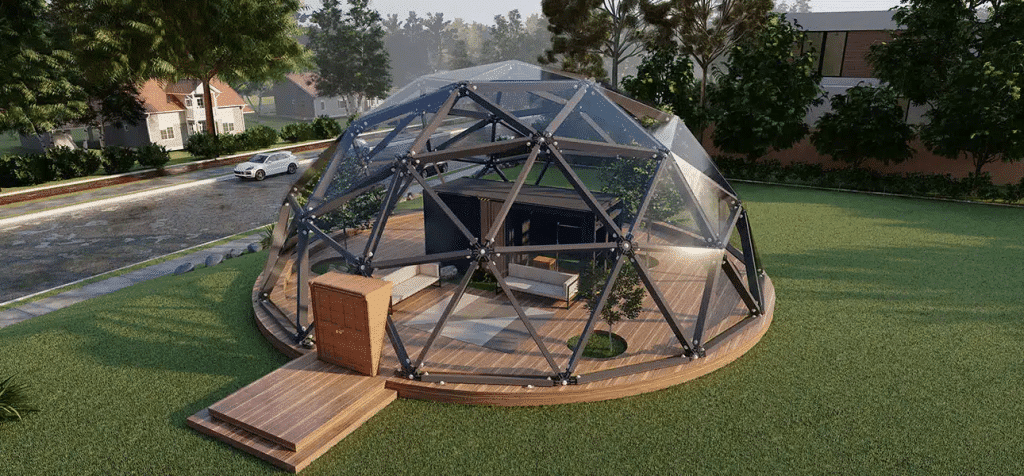
Geodesic domes are increasingly being adopted across hospitality, residential, and commercial projects due to their unique advantages:
- High strength-to-weight ratio, allowing large spans with minimal materials
- Reduced material usage, leading to lower construction waste
- Strong resistance to extreme weather, including high winds and heavy snow loads
- Improved energy efficiency, thanks to reduced surface area and better air circulation
According to the U.S. Department of Energy, energy-efficient building design plays a key role in lowering long-term operating costs. The shape and structure of geodesic domes naturally support this efficiency, making them a practical choice for sustainable construction.
Average Geodesic Dome Cost in 2026
The geodesic dome cost depends on size, engineering complexity, and whether you’re building a basic shell or a fully finished structure.
Typical Price Ranges
| Dome Diameter | Use Case | Estimated Cost |
| 16 ft – 20 ft | Backyard office, small dome | $8,000 – $25,000 |
| 24 ft – 30 ft | Glamping dome, studio | $25,000 – $75,000 |
| 36 ft – 50 ft | Luxury dome, event space | $75,000 – $250,000+ |
You can compare configurations and pricing tiers across different geodesic dome models and sizes to get a better sense of what fits your budget.
Geodesic Dome Cost Breakdown (Detailed)
To accurately estimate the cost of dome construction, it’s essential to understand how each component contributes to the total investment. Unlike traditional buildings, geodesic domes are highly system-driven, meaning performance, durability, and cost are directly tied to material and engineering choices.
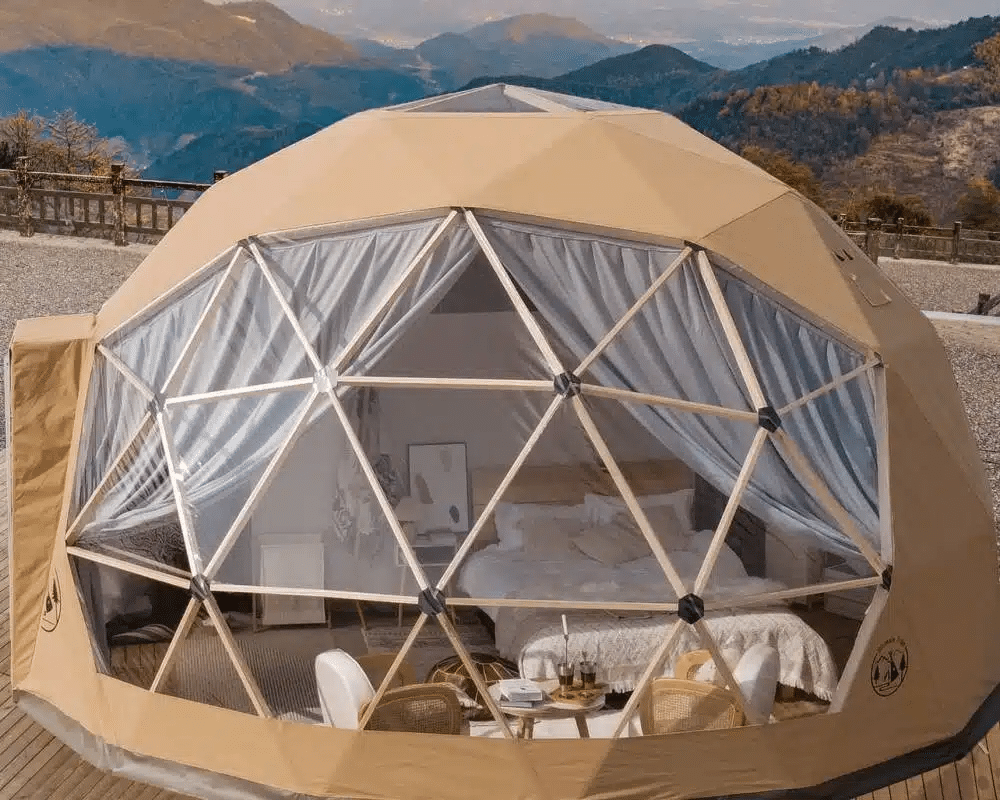
1. Structural Frame
The structural frame is the backbone of the dome and typically accounts for 20%–35% of total project cost. It determines load-bearing capacity, lifespan, and compliance with local building codes.
Common frame materials:
- Galvanized Steel (Industry Standard):
Offers high strength, corrosion resistance, and long-term durability. Ideal for glamping, commercial, and permanent installations. - Aluminum (Premium Option):
Lightweight and naturally corrosion-resistant, but more expensive. Often used in high-end or coastal projects where weight and rust resistance are critical. - Engineered Wood:
Less common for commercial domes but used in eco-focused or aesthetic builds. Requires more maintenance and is less suitable for extreme climates.
Key cost drivers:
- Snow and wind load engineering
- Diameter and height of the dome
- Frequency (complexity of triangular grid)
Higher-frequency domes (more triangles) improve strength and aesthetics but increase fabrication and installation costs.
2. Exterior Covering System
The outer shell is one of the most critical elements influencing thermal performance, durability, and guest experience.
Material options:
- PVC Architectural Fabric:
Cost-effective and widely used in glamping domes. Offers flexibility, UV resistance, and moderate insulation when layered. - Polycarbonate Panels:
Rigid panels with better insulation and durability. Suitable for semi-permanent or all-season domes. - Glass Panel Systems (Premium):
Used in luxury domes for panoramic views. Significantly increases cost due to structural and thermal requirements. - Insulated Composite Panels:
Designed for extreme climates. Provide superior thermal insulation and energy efficiency.
In hospitality settings, choosing the right covering is crucial. For example, glamping domes designed for all-weather performance use multi-layered materials to balance insulation, durability, and visual appeal—directly impacting guest comfort and occupancy rates.
3. Foundation & Platform
Foundation requirements vary depending on terrain, climate, and whether the dome is temporary or permanent.
Common foundation types:
- Concrete Slab:
Best for permanent installations. Provides maximum stability and supports utilities like plumbing and drainage. - Raised Wooden Deck:
Popular in glamping setups. Elevates the structure, improves drainage, and minimizes site disruption. - Steel Modular Platforms:
Ideal for remote or uneven terrain. Faster to install and suitable for modular expansion.
Factors affecting cost:
- Soil condition and grading requirements
- Accessibility of the site
- Integration with utilities
A poorly planned foundation can lead to long-term structural issues, making this a critical (and often underestimated) investment area.
4. Interior Build-Out
This is where the geodome cost can increase significantly, especially for hospitality or residential use.
Core components include:
- Thermal insulation (spray foam or rigid panels)
- Bathrooms and plumbing infrastructure
- Flooring, lighting, and interior finishes
In high-end builds, interiors are designed to deliver a premium experience—often including smart systems, luxury bathrooms, and custom furnishings.
5. Utilities & Systems (MEP)
Mechanical, electrical, and plumbing (MEP) systems are essential for making the dome functional and compliant.
Includes:
- Electrical wiring and lighting design
- Plumbing systems (water supply, drainage)
- Heating, ventilation, and air conditioning
Factors That Affect Geodome Cost
The final cost of a dome is influenced by multiple variables, many of which are site- and use-case-specific.
Key Cost Drivers:
- Dome Size and Height:
Costs increase non-linearly with size due to structural complexity and material requirements. - Wind & Snow Load Requirements:
Domes in regions with heavy snow or high winds require reinforced frames and upgraded materials. - Site Accessibility:
Remote locations increase transportation and labor costs. - Customization Level:
Skylights, panoramic windows, partition walls, and premium finishes all add to the total cost. - Installation Complexity:
Labor costs vary depending on terrain, dome size, and assembly difficulty.
For example, domes built in extreme climates require enhanced insulation and structural reinforcement—raising upfront costs but significantly improving long-term performance and durability.
FAQs About Geodesic Dome Cost
What is the average geodesic dome cost in 2026?
The geodesic dome cost typically ranges from $8,000 to $250,000+, depending on size, materials, and level of customization.
What is the cheapest way to build a dome?
The most affordable option is a DIY dome kit with minimal interior build-out. However, this approach may not meet commercial standards or building codes.
How long do geodesic domes last?
Most domes last 20–50 years, depending on material quality, maintenance, and environmental conditions.
Conclusion
The geodesic dome cost in 2026 ultimately depends on how well your project is planned and executed. Smaller domes can be relatively affordable, but high-performance domes, especially those designed for hospitality or residential use, require careful planning and a higher level of investment.
What sets geodesic domes apart is not just the cost of dome construction, but the long-term value they offer. With better energy efficiency, strong structural performance, and a unique experience for users, domes continue to stand out as a smart and future-ready investment.
Ready to Build Your Dome?
If you’re planning a dome project, the next step is choosing the right partner and configuration.
Explore custom geodesic dome solutions, review available models, or request a personalized quote to bring your vision to life.
Writer : Neha Verma – A dome lover