
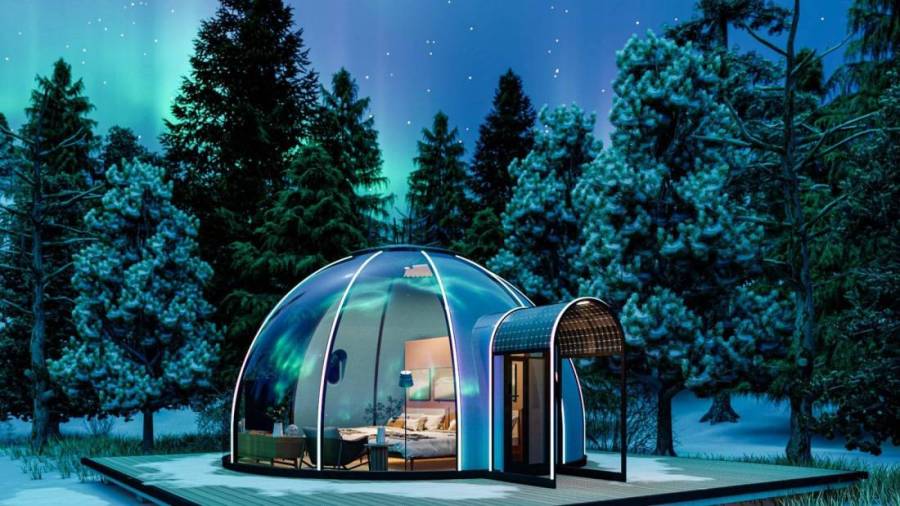
As global temperatures continue to rise and the built environment accounts for nearly 40% of worldwide CO₂ emissions (Architecture 2030), architects, developers, and urban planners are under increasing pressure to rethink traditional construction methods. The challenge is to design buildings that minimize environmental impact while maintaining durability, functionality, and aesthetic appeal. Innovative solutions are needed more than ever to address the dual demands of sustainability and efficiency.
Among the emerging solutions, geodesic domes are making a strong comeback. Once seen as a futuristic experiment, these structures combine efficient geometry, modern materials, and thoughtful engineering to create buildings that are resilient, energy-efficient, and visually striking. Their unique triangular framework distributes stress evenly, reduces material usage, and allows for expansive interior spaces without the need for extensive support beams—qualities that make them ideal for sustainable architecture.
The benefits of geodesic domes are already evident in the United States. Take Biosphere 2 in Arizona, for example, where geodesic structures simulate closed ecological systems for research, experiment with energy-efficient climate control, and serve as models for sustainable living (Biosphere 2). Beyond research, these domes have inspired eco-resorts, glamping sites, and innovative residential projects across the country, proving that adaptable, low-impact designs are not just feasible—they’re becoming essential in the future of architecture.
What is a Geodesic Dome?
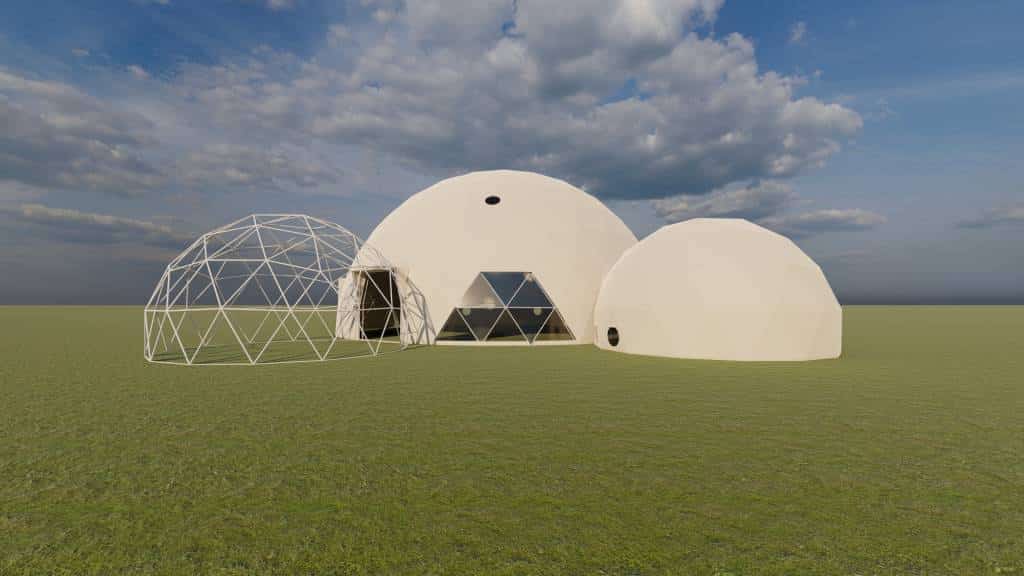
A geodesic dome is a spherical or partial-sphere structure formed by a network of interconnected triangles that distribute stress evenly. Buckminster Fuller popularized the concept in the mid-20th century, demonstrating that domes can enclose the largest volume with the least surface area—a property that makes them exceptionally efficient (Wikipedia). Today, domes range from small backyard greenhouses to massive event venues, proving their versatility across residential, commercial, and hospitality uses. Domespaces’ Greenhouse Domes and Event & Exhibition Domes are prime examples of this versatility.
Why Geodesic Domes Excel at Sustainability?
1. Energy Efficiency and Thermal Performance
The dome’s geometry minimizes heat loss and gain. A 2024 study in Buildings found that geodesic dome accommodations reduced cooling loads by 52% compared to conventional prismatic buildings (MDPI). The reduced surface area limits thermal exchange, while the curved shape encourages natural airflow, often eliminating the need for mechanical ventilation. Over time, this translates into lower energy costs and a reduced carbon footprint—benefits evident in Domespaces’ Glamping Domes.
2. Material Efficiency
Geodesic domes achieve extraordinary material efficiency through their triangular, reticulated framework and optimized geometry. Compared with other dome types under the same span and load, geodesic domes with uniform member sizing have been found to be up to ~28% lighter.
3. Resilience Against Extreme Weather
As climate-related disasters increase, resilience matters. The triangular network of a dome distributes stress evenly, making it highly resistant to wind, snow, and seismic activity. Domespaces’ Ultimate Dome Package is built to similar standards for dependable performance in diverse climates.
4. Biophilic Design and Indoor Comfort
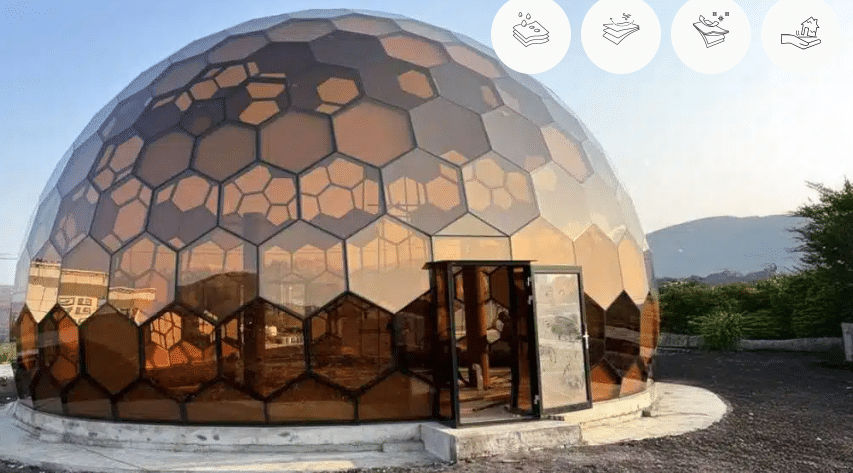
Geodesic domes promote natural lighting and ventilation. Open layouts reduce dark corners, and the shape allows more even daylight distribution—improving mood and reducing reliance on artificial lighting.
Domespaces’ Custom Dome Options can be tailored to maximize this biophilic connection.
5. Adaptability Across Applications
From greenhouse domes to immersive event spaces, geodesic domes meet diverse needs while minimizing resource use. Their modularity makes them easy to expand, relocate, or repurpose—reducing waste and extending their lifecycle.
Domespaces supports this adaptability with options like Event & Exhibition Domes and Glamping Domes.
Overcoming Challenges
- Permitting & Codes: Building codes often assume rectangular forms. Partnering with experienced geodesic dome manufacturers like Domespaces ensures proper engineering documentation.
- Thermal Sealing: Precision in panel connections and insulation maximizes efficiency.
- Upfront Costs: High-quality materials may cost more initially but deliver long-term savings.
- Logistics: Transporting components can be challenging, making reliable geodesic dome suppliers essential.
Innovations Driving the Dome Movement
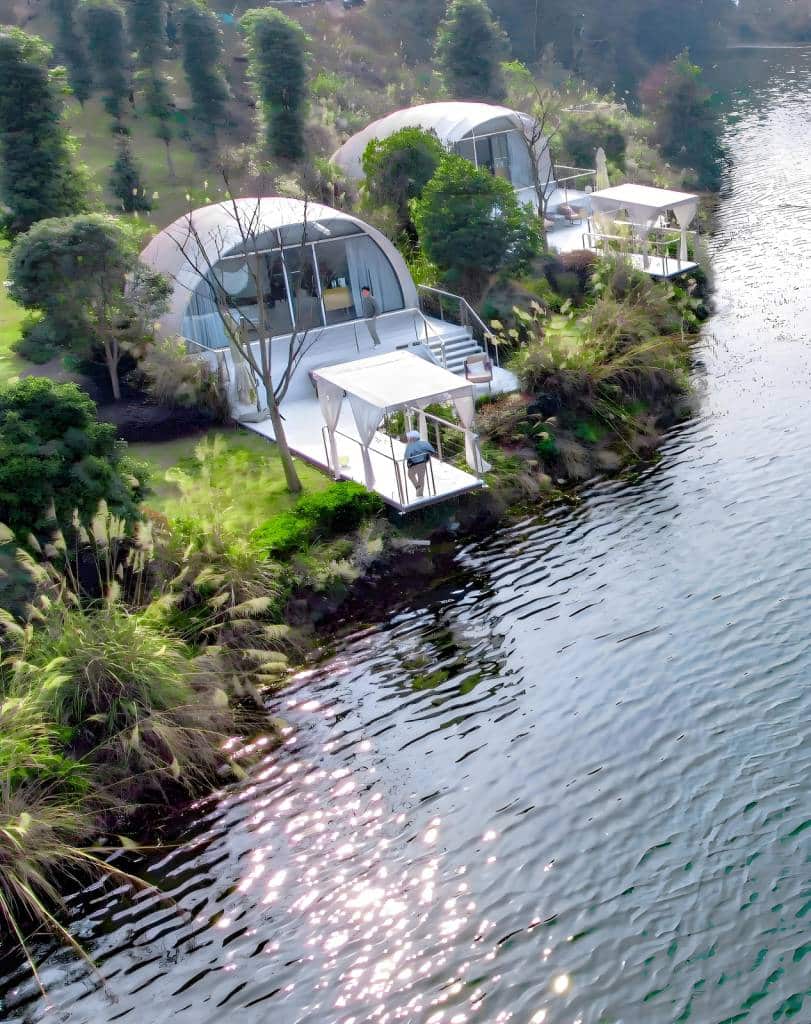
Emerging technologies are enhancing sustainability:
- Advanced Insulation Panels like aerogels for better energy retention.
- Integrated Solar Systems that follow the dome’s curvature for maximum capture.
- Smart Ventilation using IoT sensors to optimize airflow.
- Off-Grid Living Solutions combining rainwater harvesting and renewables.
These innovations position geodesic dome structures as practical solutions for affordable housing and disaster relief—applications that Domespaces actively supports.
Conclusion & Call to Action
Geodesic domes combine energy efficiency, material conservation, and resilience—qualities urgently needed in future architecture. With global building energy consumption expected to rise by 50% by 2050 (IEA), choosing sustainable structures is essential.
Domespaces is a trusted geodesic dome manufacturer and one of the most reliable geodesic dome suppliers, offering innovative structures tailored to glamping, agriculture, events, and residential use. If you’re ready to buy geodesic dome solutions that deliver beauty, efficiency, and durability, contact Domespaces today to bring your sustainable vision to life.


